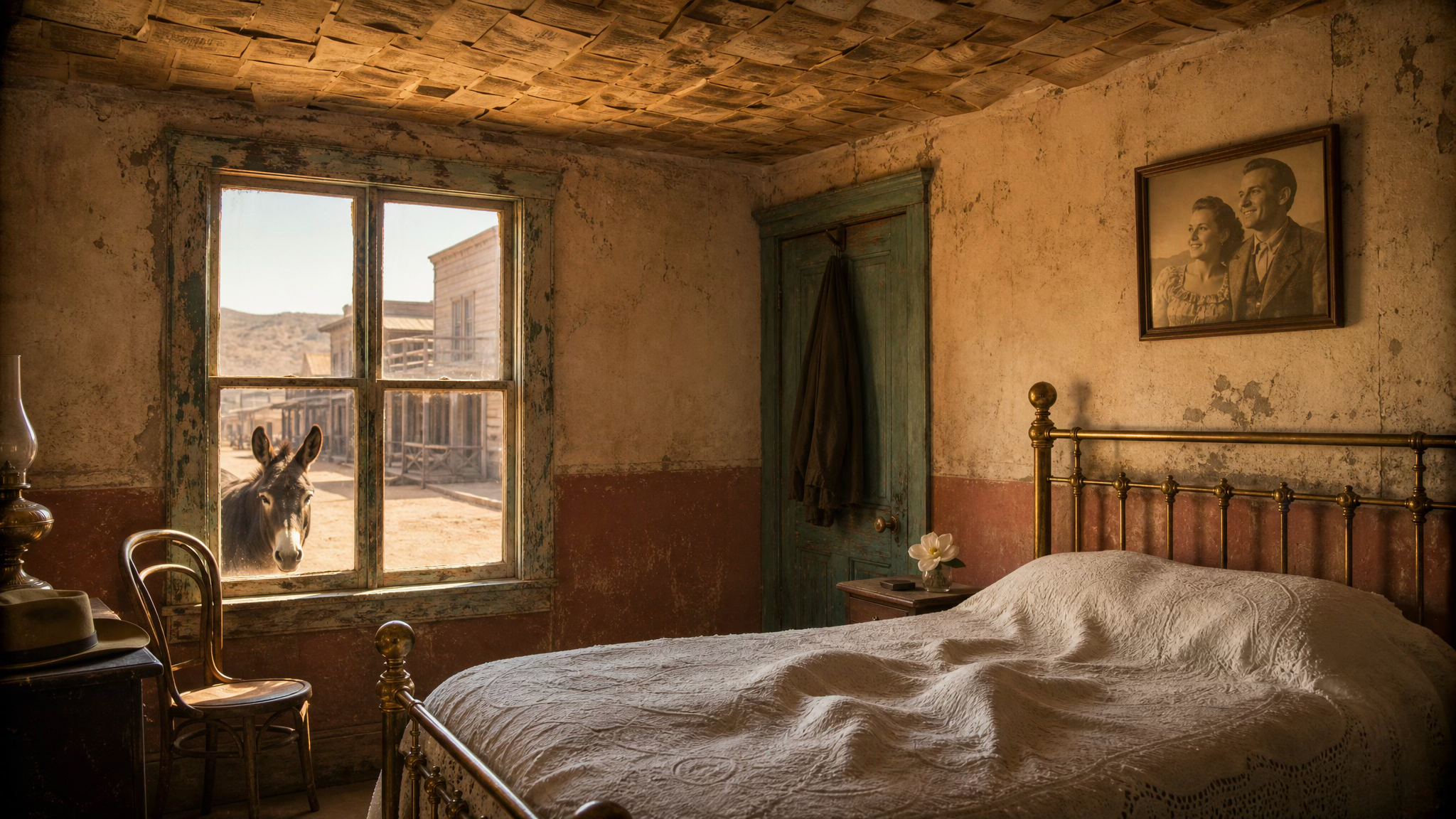
Originally called the Durlin Hotel, this building survived multiple fires before reopening in 1920. It quickly became famous when Clark Gable and Carole Lombard supposedly spent their wedding night here after getting married in Kingman in 1939. Oatman itself is one of Arizona’s most fascinating communities — once a booming gold mining town with 10,000 residents, it became a ghost town when the mines closed, then was slowly revived by Route 66 tourism. Today wild burros descended from miners’ pack animals roam the streets freely, and actors stage Wild West gunfights daily on the main road.
The Haunting
When the hotel still operated as lodging (it’s now configured as a restaurant and museum), staff and guests reported hearing Clark and Carole whispering and laughing from upstairs, reliving the happiest night of their lives. The sounds of their reunion — if that’s what it is — are described as warm and unmistakably intimate.
The Theater Room Bodies — Distinct outlines of sleeping bodies have been found pressed into the beds in the Theater Room Museum, as if invisible guests had just risen. The impressions appear fresh, regardless of when the room was last occupied.
Oatie the Irish Miner — An Irish miner nicknamed “Oatie” can be heard playing his bagpipes in and around the hotel at odd hours. No living piper has ever been identified. The sound drifts through the building and into the street, carrying the melancholy of someone who loved this place and can’t quite leave it.
The Campy Detail
The wild burros that wander freely through Oatman add to its surreal atmosphere. They’re descended from animals brought by miners in the early 1900s and simply never left when the mines closed. Visitors feed them carrots sold at local shops. The combination of free-roaming burros, daily staged gunfights, and genuinely haunted buildings makes Oatman feel like an Old West movie set that became real — or perhaps a real place that became a movie set and never recovered.
Historical Context
Oatman produced over 1.8 million ounces of gold between 1900 and 1942, when the federal government declared gold mining non-essential to the war effort and closed the mines overnight. The 10,000-person boom town emptied almost immediately. The surviving buildings and the ghosts of its former prosperity make Oatman one of the most evocative stops at the western end of Arizona’s Route 66.